
The best March Madness pool ideas go well beyond printing 64-team brackets and calling it a day. Whether you're running a 10-person office challenge or a 200-entry group pool, the format you choose shapes how engaged people stay from Selection Sunday through the championship. Here are the top formats worth knowing:
- Standard Bracket Pool — everyone picks all 63 games upfront; scoring typically follows a 1-2-4-8-16-32 doubling system or a flatter additive scale like 1-2-3-4-5-6
- The Takeover Pool — participants "take over" a team mid-tournament, earning points only from that team's remaining wins
- March Madness Squares (Box Pool) — a grid-based format borrowed from Super Bowl squares; winners are determined by final score digits each round
- Front End Excitement Format — awards heavy points in the first two rounds, rewarding early-round accuracy over late-tournament guessing
- Knockout (Survivor) Format — pick one team per round to win; one wrong pick and you're eliminated
- Pick One Of Each Seed — each participant selects exactly one team from every seed line (1 through 16). Points accumulate for every win your chosen teams earn throughout the tournament.
- Draft or Auction Style — teams are drafted or bid on before the tournament; you root for your stable of teams, not a single bracket
- Seed Multiplier Pool — standard bracket scoring multiplied by the winning team's seed number, making upsets dramatically more valuable
Table of Contents
- What are the most engaging March Madness pool formats?
- How do you run a March Madness pool smoothly?
- How can MegaSports Arena help you manage your pool?
- What are some creative non-basketball pool themes?
- Megasports-arena makes running your pool effortless
- Key Takeaways
What are the most engaging March Madness pool formats?
Standard bracket pool
The classic format survives because it works. Everyone submits picks for all 63 games before tip-off, and points accumulate based on correct predictions. The scoring system is where organizers have real creative control.
Under the traditional 1-2-4-8-16-32 structure, points double every round. A correct championship pick is worth 32 points — as much as 32 perfect first round picks. That math means early-round upsets offer little strategic value in standard scoring; the real separation happens in the Elite Eight and Final Four. Flip to a 1-2-3-4-5-6 additive system and the first weekend suddenly matters a lot more, since the champion is worth only six times a first-round win.
Pool size changes everything here. In a 12-person pool, conservative picks can win outright. In a 300-entry pool, someone is almost certainly going to nail several low-probability outcomes, so playing it safe gets you a respectable finish and nothing to show for it.
The Takeover Pool
This format solves one of bracket pools' biggest problems: people who bust out in round one stop caring. In the Takeover Pool, participants don't pick games in advance. Instead, they claim a surviving team at a designated point mid-tournament, usually after the Sweet 16 is set. From that moment, their score is built entirely on that team's remaining wins.
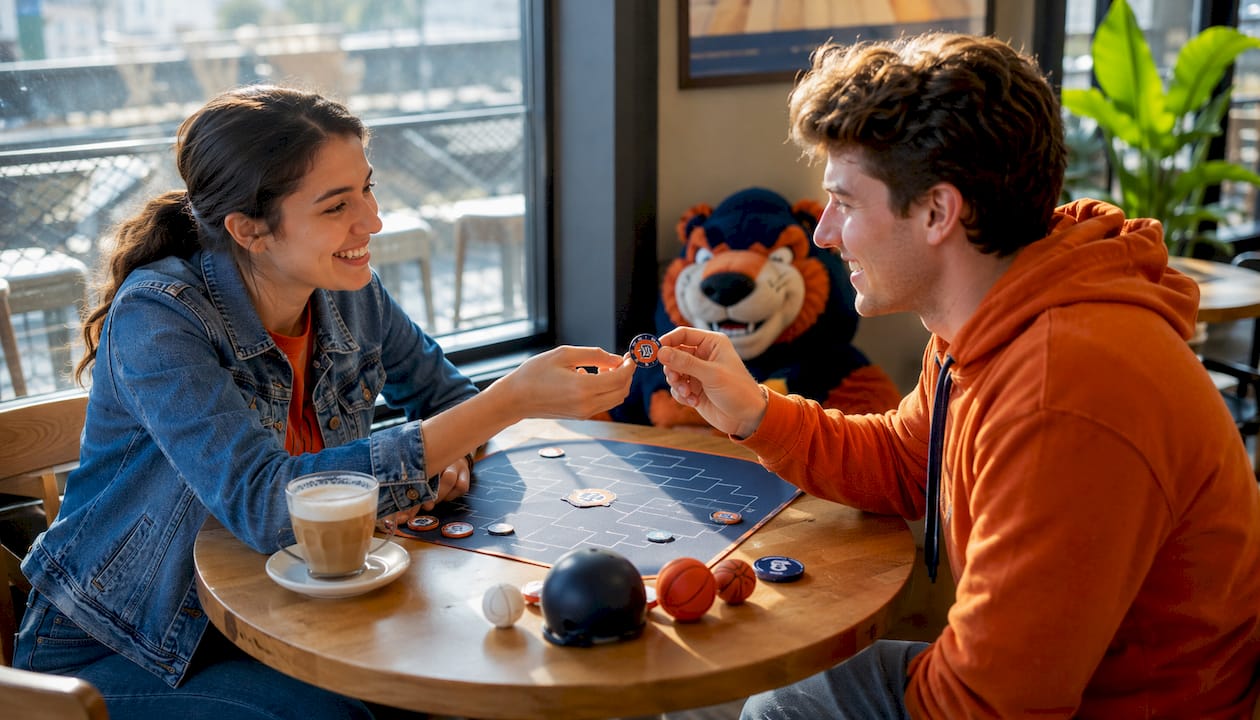
The drama is real. Claiming a No. 1 seed feels safe but scores fewer bonus points. Grabbing a No. 5 seed still alive in the Elite Eight? That's where the format gets loud.
March Madness Squares (Box Pool)
Squares require zero basketball knowledge, which makes them the best format for pulling in people who would otherwise skip the pool entirely. Print a 10x10 grid, sell each square to participants, then randomly assign digits 0–9 to the rows and columns. After each game, the winner is whoever holds the square matching the last digit of each team's final score.
Run it across every game in the tournament and you have constant winners, constant payouts, and constant reasons to watch. It's the format that keeps the break room buzzing on a Thursday afternoon when half the bracket field has already busted.
Front End Excitement format
Standard brackets front-load the picks but back-load the points, which means the first weekend feels almost irrelevant to the standings. The Front End Excitement format flips that. First and second-round correct picks earn significantly more points than later rounds, so the chaos of the opening 48 hours actually decides the pool.
This works especially well for casual groups where people lose interest by the second week. Everyone is competitive through the first weekend, which is when the tournament is most fun to watch anyway.
Knockout (Survivor) format
Pick one team per round to win. They win, you advance. They lose, you're out. You cannot reuse a team once you've picked them, which means every decision has consequences that extend well beyond the current round.
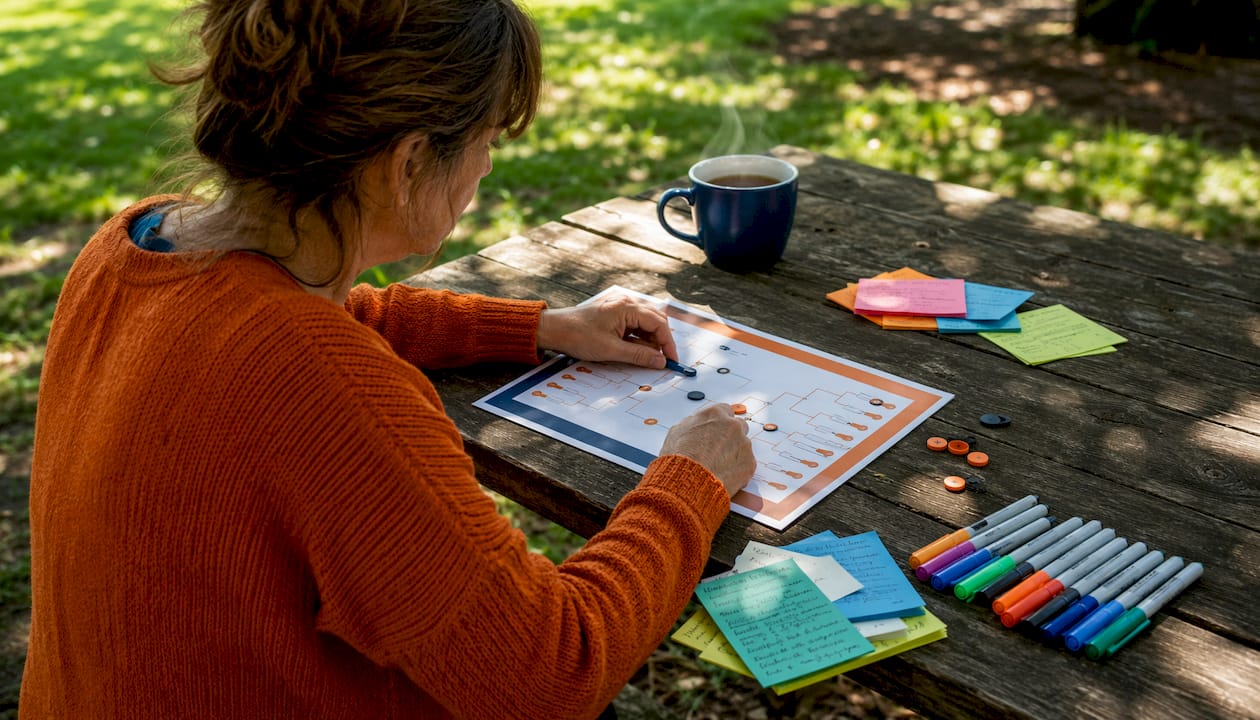
The optimal survivor strategy shifts as the field thins. Early rounds favor conservative picks because solid options are plentiful. By the Elite Eight, the favorites are heavily owned, and the contrarian pick becomes the highest-value play. Not because the underdog is likely to win, but because if 60% of the remaining field picks the same team and that team loses, 60% of your competition is gone in one round.
Pick One Of Each Seed
Each participant selects exactly one team from every seed line, 1 through 16. You must have a No. 1 seed, a No. 2 seed, and so on, all the way down to a No. 16. Points accumulate for every win your chosen teams earn throughout the tournament.
The strategy is genuinely interesting. Your No. 1 seed pick is almost automatic, but your No. 12 and No. 13 selections are where pools are won and lost. A No. 12 seed that runs to the Sweet 16 while your opponent's No. 12 exits in round one creates a gap that's hard to close.
Draft or Auction style pools
In a team draft, participants take turns selecting teams in a snake draft order before the tournament begins. Everyone ends up with a portfolio of teams, and you earn points for every game any of your teams win. The draft order matters, but so does strategy: do you load up on No. 1 and No. 2 seeds, or diversify across seed lines to maximize games played?
The auction variant is more chaotic and more fun. Every team goes up for bid. Each participant has a fixed budget, say $100 in auction dollars, and can spend it however they want. Blow your whole budget on two No. 1 seeds, or spread it across eight mid-major teams with long tournament runs ahead of them. In one well-known auction format, each game win earns a percentage of the total prize pot, so the math of team value versus bid price becomes genuinely strategic.
Seed Multiplier pool
This is the standard bracket format with one twist: your points for a correct pick are multiplied by the winning team's seed number. Pick a No. 10 seed correctly in the Round of 32 and you earn 20 points (2 points for the round × 10 seed). Pick the No. 1 seed correctly and you earn just 2 points.
Scoring systems that weight upsets change strategy completely. Suddenly, correctly predicting a No. 12 over a No. 5 is worth more than getting five chalk picks right. It rewards research, punishes lazy bracket-filling, and produces a completely different winner than a standard pool would.
How do you run a March Madness pool smoothly?
Set the rules before a single pick is submitted
Every dispute in a pool traces back to a rule that wasn't written down before the tournament started. Publish the scoring system, entry deadline, tiebreaker method, and prize structure in writing before Selection Sunday. Send it to every participant. Make them confirm they received it.
For tiebreakers, the most common method is the total combined score of the championship game. Whoever predicted the closest total wins. Set this up in advance and you avoid the awkward conversation after the final buzzer.
Prize structures that actually motivate people
Winner-take-all pools work fine for small groups. For larger pools, multi-place prize structures keep more people engaged through the final weekend. A common split for a 20-person pool: 60% to first place, 25% to second, 15% to third. That keeps three people invested in the outcome instead of one.
Non-cash prizes sidestep legal complications entirely. A gift card, a half-day off, a trophy, or bragging rights are all legitimate prizes that require no legal review. For office pools specifically, this is the cleanest path.
Legal considerations for workplace pools
Standard NCAA bracket pools where participants pay an entry fee for a chance to win cash can constitute illegal gambling under many state laws, regardless of how casual the arrangement feels. Legal compliance guidance consistently recommends keeping workplace pools free-to-enter with non-cash prizes, making participation strictly opt-in, and checking with HR before organizing anything involving money. A free bracket challenge with a gift card prize removes the legal exposure entirely.
Keeping casual participants engaged
Not everyone in your pool follows college basketball. The formats that retain casual participants share one trait: they create reasons to check in every day, not just at the end. Squares pools pay out after every game. Survivor pools eliminate someone each round. Draft pools give people a roster to root for even when their bracket is busted.
For office settings, posting a physical leaderboard near the coffee machine works better than most digital nudges. People check it every time they walk by.
Pro Tip: In large bracket pools, the real separation happens at the Elite Eight and Final Four, not the first round. Encourage participants to spend more time on their Sweet 16 onward picks than on first-round upsets. Most casual players overemphasize early chaos and underinvest in the picks that actually determine the winner.
Handling disputes fairly
When a dispute arises, the written rules are the only authority. If the rules don't address the situation, the organizer makes a final call and documents it for future years. Never change a scoring rule mid-tournament. Never make exceptions for individual participants. Consistency is what keeps people coming back next year.
How can MegaSports Arena help you manage your pool?
Running a March Madness pool manually, tracking picks in a spreadsheet, updating scores by hand, and fielding "what's the current standings?" texts at 11 PM, is the fastest way to burn out an organizer. Digital platforms eliminate that friction.
Megasports-arena is built for exactly this kind of competition management. The platform handles the operational side so organizers can focus on the fun side. Key features relevant to March Madness pool management include:
- DIY custom pools — build your own contest format with custom scoring rules, entry windows, and participant limits
- Automated leaderboards — standings update live as results come in, visible to all participants without any manual input from the organizer
- Contest scheduling — set entry deadlines, round transitions, and result windows in advance
- Rewards points — participants earn points across contests, creating ongoing engagement beyond a single pool
- Archived results — past contest results are stored and accessible, useful for year-over-year bragging rights
- Embeddable content — if you run a sports website or community, Megasports-arena's games can be embedded to keep your audience on your platform
The live leaderboard feature alone changes the participant experience. Instead of waiting for the organizer to post updated standings, everyone can check their position after every game. That real-time feedback loop is what keeps people checking in throughout the tournament rather than losing interest after their bracket busts.
For organizers managing multiple pool types simultaneously, the picks hub gives participants a centralized place to submit and track their entries across different contest formats.
What are some creative non-basketball pool themes?
Not everyone in your office or friend group follows college basketball. That's not a reason to skip the pool. The bracket format is what makes March Madness fun, and that format applies to anything people have opinions about.
Here are themes that consistently generate strong participation, even from people who couldn't name a single team in the tournament:
- Snack Madness — seed 16 or 32 office snacks into a bracket, run one matchup per day via a Slack poll or group chat vote, and let the office decide whether pretzels beat popcorn in the Final Four
- Lunch Spot Madness — the 16 most-loved lunch spots near the office compete head-to-head; the winner earns a company-paid team lunch on championship day
- Pet Photo Bracket — employees submit photos of their pets, the office votes bracket-style, and the winning pet's owner gets a prize; one of the highest-engagement internal events you can run
- Best Movie Bracket — seed 32 popular films and run daily matchups; strong opinions emerge fast, and people who never watch sports suddenly care deeply about whether The Godfather beats Jurassic Park
- Coffee Shop Bracket — local coffee spots compete for the title of best cup in the area; works especially well in cities with strong independent coffee cultures
- Best TV Show Bracket — split into comedy and drama regions for fairer seeding; the debates alone are worth the setup time
- Baby Photo Bracket — employees submit childhood photos of themselves, coworkers vote on which is which; lighthearted, age-inclusive, and genuinely funny
The mechanics are identical to a standard bracket pool. You seed the entries, run matchups in rounds, and crown a champion. The only difference is the subject matter, and that difference is what gets the non-sports fans in the room actually invested.
For office organizers, these themes also sidestep the legal complications of cash-entry basketball pools entirely. There's no gambling angle, no HR review needed, and no one left out because they don't follow the NCAA.
Megasports-arena makes running your pool effortless
Running a great March Madness pool takes more than a good format. It takes a platform that handles the logistics so you can focus on the competition itself.

Megasports-arena gives pool organizers something most manual setups can't: a free-to-play environment where participants track picks, check live standings, and stay engaged across every round without a single spreadsheet update from you. The platform covers NBA, NFL, MLB, NHL, and more, with DIY custom pool options that let you build the exact format your group wants, whether that's a standard bracket challenge, a survivor-style knockout, or something entirely custom.
The game room brings all active contests into one place, so participants never lose track of where they stand. Rewards points accumulate across contests, giving people a reason to stay engaged even after their bracket busts. For websites and community organizers, the embeddable format means you can bring the pool experience directly to your audience without sending them elsewhere.
Head to Megasports-arena to browse active contests and set up your March Madness pool before Selection Sunday.
Key Takeaways
The most effective March Madness pools match their format to the group's size, engagement level, and appetite for complexity, then use automated tools to keep the experience running smoothly.
| Point | Details |
|---|---|
| Format determines engagement | Squares and Survivor pools create daily reasons to check in; standard brackets front-load picks but back-load excitement. |
| Scoring system shapes strategy | In a 1-2-4-8-16-32 scoring system, a correct championship pick is worth 32 points, emphasizing late-round strategy. |
| Pool size changes risk tolerance | Small pools favor conservative picks; large pools require differentiated, underdog-leaning selections to separate from the field. |
| Legal safety for office pools | Free-to-enter pools with non-cash prizes remove legal exposure under most U.S. state laws. |
| Megasports-arena simplifies operations | The platform automates leaderboards, custom pool creation, and participant tracking, removing manual workload for organizers. |