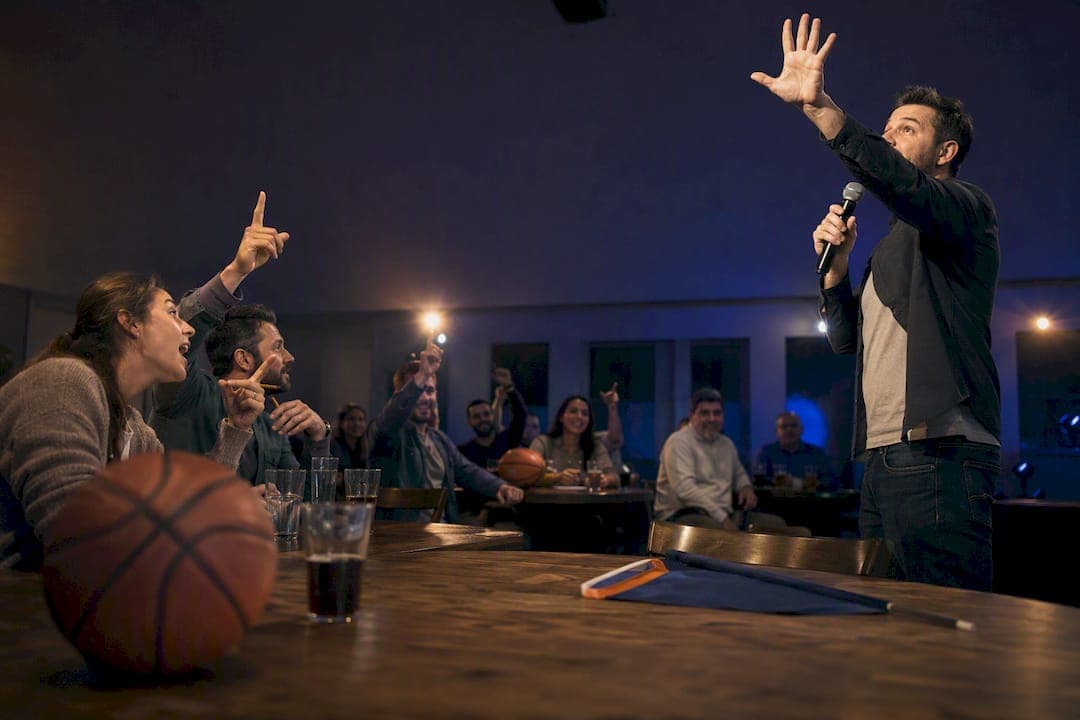
The best sports trivia night mixes major-league rounds (NFL, NBA, MLB, NHL) with one international round like the Super Bowl or the Olympic Games, then adds one or two novelty rounds to break up the pacing. Layer easy, medium, and hard questions inside every round instead of stacking difficulty by round. Below you'll find category breakdowns, ready-made sample questions, and formats you can build from tonight, including a few that Megasports Arena already has assembled for you.
TL;DR:
- Include a mix of major-league and international rounds to appeal to casual and hardcore fans, with league-specific questions and Olympic or World Cup topics.
- Use a variety of formats such as picture, audio, and interactive rounds to maintain energy and engagement throughout the night.
- Balance questions by difficulty levels in each round to keep both casual and serious fans interested, adjusting based on in-room feedback.
- Organize questions around specific categories like rules, geography, stadiums, or players to diversify content and prevent monotony.
- Prepare your questions in advance, include a scoring method and tiebreakers, and be ready to switch to wildcard rounds if pacing slows down.
Table of Contents
- Sports Trivia Categories That Actually Fill a Round
- How to Run Picture Rounds, Audio Rounds, and Other Formats
- Balancing Difficulty and League Mix Across the Night
- Ready-to-Use Sample Questions by Sport and Difficulty
- Writing Fair Questions Without Starting an Argument
- Where Megasports Arena Fits Into Your Trivia Night
- Olympics and Multi-Sport Events as a Trivia Category
- Sport-Specific Rules and Terminology as Their Own Category
- Geography-Based Sports Trivia: Stadiums, Countries, and Venues
- What Actually Makes a Trivia Night Work
- Sources
Sports Trivia Categories That Actually Fill a Round
A good trivia night isn't one long sports round. It's five or six shorter rounds, each built around a category that gives the host something specific to write toward. Here's how experienced quiz builders slice it up.
Major-league rounds are the backbone. Split NFL, NBA, MLB, and NHL into their own ten-minute blocks rather than blending them, and lean on records, MVPs, and franchise lore, since those hold up across casual and hardcore fans alike. A question like "Which team has won the most Super Bowl titles?" works because it rewards general awareness, not niche stat memorization. Sourced sports-trivia collections consistently anchor rounds this way, pairing record-based questions with championship moments and hall-of-fame facts that don't require a scoreboard app to verify.
International and tournament rounds widen the net. World Cup history, Olympic host cities, and Champions League upsets pull in players who don't follow American leagues closely but know soccer or track and field. This is also where you get some of your best "aha" moments, since international sports trivia tends to surprise even confident players.
Player- and era-focused rounds work well as a mid-night change of pace. Try "90s vs. 2000s" as a format: read a stat or nickname and have teams guess the decade. Legends rounds (Ali, Gretzky, Serena Williams) reward long-time fans without punishing newer ones, since these names cross generations.
Niche and novelty rounds are your wild cards:
- Stadium and arena name trivia (old names vs. current sponsors)
- Mascot identification from silhouette or description
- Sports movie quotes and moments
- Equipment and gear vocabulary ("What's a 'gimme' in golf?")
Novelty rounds work best in the middle or near the end of the night, when energy dips and players want something lighter than stat recall. Common category taxonomies across trivia apps back this pattern up, splitting content across general sports, individual leagues, and a smaller niche bucket rather than an even split.
How to Run Picture Rounds, Audio Rounds, and Other Formats
Format variety keeps a room engaged longer than any single category can. Here's how to build the most common ones without turning production into a second job.
- Picture rounds. Pull five to eight images (blurred logos, cropped jersey numbers, stadium aerials) and project them one at a time with a 15 to 20 second answer window. Stick to public domain or your own screenshots to sidestep copyright headaches.
- Audio rounds. Play 10 to 15 second clips of walk-up songs, crowd chants, or famous broadcast calls. Always have a printed backup list of clue text in case the speaker cuts out.
- Anagrams and name-swap puzzles. Scramble a player or team name ("RONBEL AMEJS" for LeBron James) and give one hint if nobody solves it in 30 seconds.
- Lightning rounds. Ten rapid-fire questions, five seconds each, no discussion. These reset energy fast between denser rounds.
- Interactive/app-assisted rounds. A live poll or an embeddable trivia game lets players answer on their phones instead of paper, which speeds up scoring for bigger crowds.
Pro Tip: Build your slides or printouts a full round ahead of when you'll need them. Nothing kills momentum faster than a host fumbling with a laptop while thirty people wait.
Balancing Difficulty and League Mix Across the Night
Most successful hosts balance easy, medium, and hard questions per round, rather than saving all the hardest for one difficult round that thins out the room. Sports-trivia collections that hit 100 or more questions typically organize by difficulty tier for exactly this reason: it lets hosts mix and match on the fly instead of building blind.
A workable 10-question round template:
- 4 easy questions (household-name teams, recent champions)
- 4 medium questions (specific stats, secondary storylines)
- 2 hard questions (deep-cut records, obscure trades)
Watch the room between rounds. If tables are groaning at your hard questions, swap the next round's closer for something easier from your backup list. Common pacing mistakes include running rounds too long (aim for 10 to 12 minutes max), forgetting a tiebreaker question, and not deciding in advance how you'll handle "close enough" answers. Pairing broad appeal with a smaller dose of expert-level material tends to keep both casual and serious fans in the game rather than checking out halfway through.
Well-organized social events like trivia nights measurably boost engagement and morale when they're run with intention, not just thrown together. That's as true for a company happy hour as it is for a neighborhood bar.
Ready-to-Use Sample Questions by Sport and Difficulty
Here's a starter set you can drop straight into a round sheet. Swap any name-based answer for a "first name or last name accepted" rule to reduce disputes.
- NFL (easy): Which team has won the most Super Bowl titles? (Answer: Pittsburgh Steelers and New England Patriots share the record)
- NFL (medium): Who holds the NFL record for career passing yards?
- NFL (hard): Which quarterback threw the most interceptions in a single season?
- NBA (easy): Which player is known as "King James"?
- NBA (medium): Which team drafted Michael Jordan?
- NBA (hard): Who was the last player to average a triple-double for an entire season before Russell Westbrook?
- MLB (easy): How many innings are in a standard MLB game?
- MLB (medium): Which pitcher holds the record for most career strikeouts?
- NHL (easy): What trophy is awarded to the NHL playoff MVP?
- Soccer (medium): Which country has won the most World Cup titles?
- Olympics (hard): Which country hosted the first modern Olympic Games in 1896?
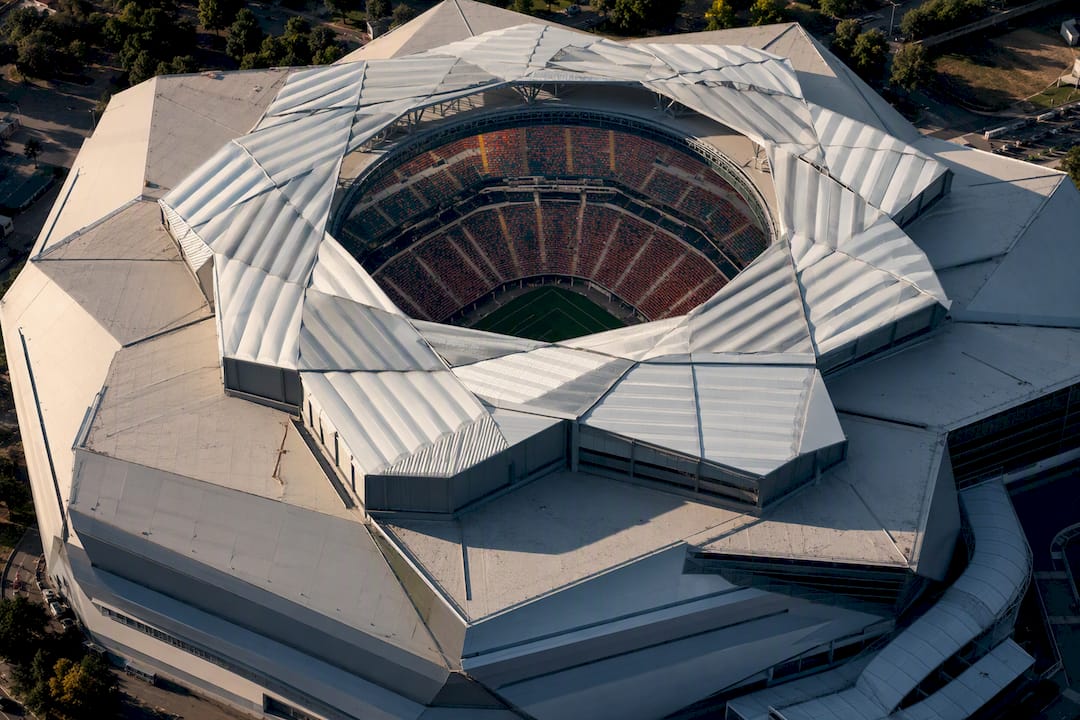
- Picture prompt (medium): Show a cropped photo of a stadium roof or unique architectural feature and ask players to name the venue.
- Audio prompt (easy): Play a famous goal-call or walk-up song and ask players to name the player or team associated with it.
Update any "current record holder" question close to your event date since these change fast, and note the season or year on your answer sheet so scorekeepers aren't guessing. Decide your acceptable-answer rules before the night starts, not mid-dispute.
Writing Fair Questions Without Starting an Argument
Ambiguous phrasing causes more trivia-night arguments than hard questions do. A few habits fix most of it:
- Phrase questions so only one interpretation is reasonable ("As of the most recent completed season" beats "currently").
- Write your answer key with acceptable variations included, not just the "correct" spelling.
- Avoid facts that update weekly (in-season stat leaders, current standings) unless you're prepared to verify them the morning of the event.
- Use plain language over jargon when the audience isn't sport-specific, and define abbreviations on first use.
Pro Tip: Print two copies of your answer key. One always ends up covered in drink rings by round three.
Before you start, confirm you have a time limit per round, a tiebreaker question in your back pocket, and a scoring method everyone can see. Skipping any of these three is the fastest way to lose control of the room.
Where Megasports Arena Fits Into Your Trivia Night
Megasports Arena's blog carries a large sports trivia question bank organized by sport and difficulty, plus a dedicated MLB set if baseball is your anchor round. The daily trivia page works well as a low-prep warm-up or lightning round. All of it is free to play, and several games can embed directly on partner sites if trivia is part of a bigger event page rather than a standalone night.
Olympics and Multi-Sport Events as a Trivia Category
The Olympic Games solve a specific problem: they give you a category almost everyone has some familiarity with, even people who don't follow any single league closely. Summer and Winter Games each open their own sub-categories, from host-city trivia to record-breaking performances in track, swimming, and gymnastics.
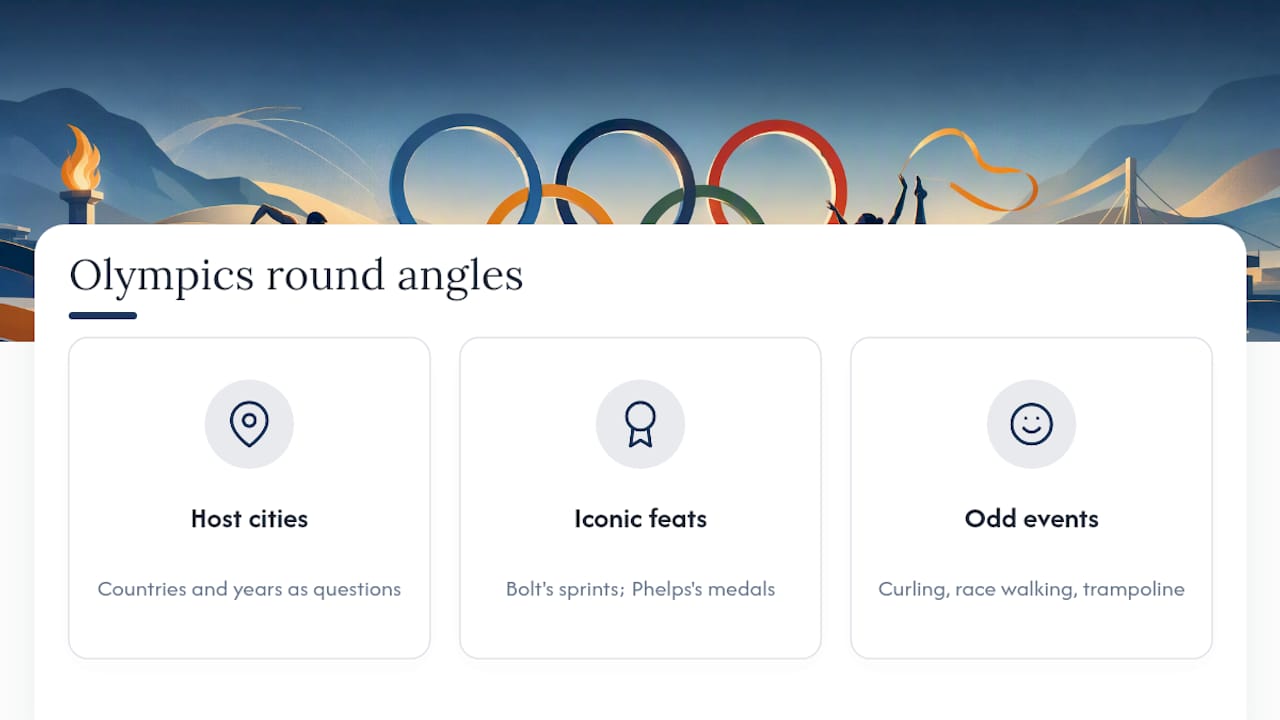
Build an Olympics round around three angles: host countries and years, iconic individual performances (Usain Bolt's sprint records, Michael Phelps's medal count), and oddball events people forget are Olympic sports (curling, race walking, trampoline). That last angle works particularly well as a lighter, laugh-generating question mixed into an otherwise stat-heavy round.
Multi-sport events beyond the Olympics, like the Pan American Games or the Commonwealth Games, make good hard-tier questions precisely because fewer casual fans track them closely. Use these sparingly. One or two per night keep the difficulty curve honest without making an entire round feel like a specialist quiz. The Olympics category also pairs naturally with a geography-based round, since host cities and countries carry their own trivia weight independent of the sports themselves.
Sport-Specific Rules and Terminology as Their Own Category
Rules and terminology questions test a different kind of knowledge than stats and history do, and they're often where casual fans get tripped up in interesting ways. "What's a balk in baseball?" or "How many players are on the ice per team in hockey during a power play?" reward people who actually watch games closely, not just people who follow headlines.
This category works best as a medium-difficulty round rather than an opener, since it demands more active recall than a stat question does. Good sourcing for this round comes from official rulebooks or long-form terminology explainers rather than casual recall, since rule nuances (like offside in soccer, or the shot clock difference between NBA and international basketball) are easy to get subtly wrong.
A smart trick: build a "translate the jargon" mini-round where you give a term from one sport (a "hat trick") and ask players to identify which sports use that same term differently, or where it originated. Hockey, soccer, and cricket all claim some version of the phrase, and untangling that makes for a genuinely fun few minutes rather than a dry rules lecture.
Geography-Based Sports Trivia: Stadiums, Countries, and Venues
Geography categories give you an easy entry point for players who know places better than they know players. Stadium-naming trivia works particularly well, since so many venues have changed sponsor names over the past two decades. Ask "What was Chase Field in Phoenix originally called?" and you'll get a mix of confident wrong guesses and one person who nails it instantly.
Country-based rounds pair naturally with soccer and the Olympics: which countries have hosted multiple World Cups, which nations have never won an Olympic gold in a specific sport, or which cities have hosted both Summer and Winter Games. These questions reward general knowledge over deep sports fandom, which makes them useful for balancing a room where not everyone follows the same leagues.
Venue trivia also opens the door for a picture round. Crop an aerial shot of a famous stadium's roof or seating bowl and ask players to identify it. Distinctive stadiums, domes, retractable roofs, unusual shapes, tend to be recognizable even to people who've never attended a game there, which is exactly the kind of broad-appeal question that keeps a mixed crowd engaged.
What Actually Makes a Trivia Night Work
The category mix matters less than most hosts assume. What separates a good night from a forgettable one is pacing: knowing when to swap a dying round for a wild-card format before the room checks out. If a round is dragging, cut it short and jump to lightning rounds rather than pushing through.
Start with the sample questions above and adjust them to your crowd's actual interests. You'll learn more from one live night than from any planning guide, this one included.
— peter
Sources
For background on major anchor topics, see the Super Bowl overview and sourced sports trivia questions. For ready-to-use question banks, Megasports Arena's full trivia collection and MLB-specific set cover most of what a host needs to build a night from scratch. If you want an interactive round instead of slides, try sports rummy for a free, embeddable option that works alongside your printed rounds.
- Super Bowl — Wikipedia
- Creating a Happier Workplace Is Possible — Harvard Business Review (2023)
- Sports Trivia Questions: 200+ Across NFL, NBA, MLB, Soccer, Olympics — CheapTrivia
- Sports Fan Quiz — Google Play store