Most contests can land sponsors when organizers match sponsor goals to clear, measurable deliverables and hand over a one-page prospectus instead of a vague pitch. Some organizers even embed an online platform to handle leaderboards and branded pages automatically. Start with a prospectus and three-tier packages: presenting, supporting, and prize partner. That single document, built before you contact anyone, is what turns a cold outreach email into a signed deal.
Table of Contents
- Types of Contest Sponsorships and What Sponsors Actually Want
- How to Build Sponsorship Packages: Tiers, Deliverables, and Pricing
- How to Pitch and Secure Contest Sponsors
- Legal Basics and Co-Sponsorship Considerations
- Sponsor Activation and Fulfillment Checklist
- Negotiating Sponsorship Terms Without Underselling Your Contest
- Turning One-Time Sponsors Into Repeat Partners
- Common Challenges in Contest Sponsorships and How to Fix Them
- Publisher Perspective: Using Megasports Arena to Host Branded Contests
- How Megasports Arena Can Help Run Sponsored Contests
- Sources
- FAQ
Types of Contest Sponsorships and What Sponsors Actually Want
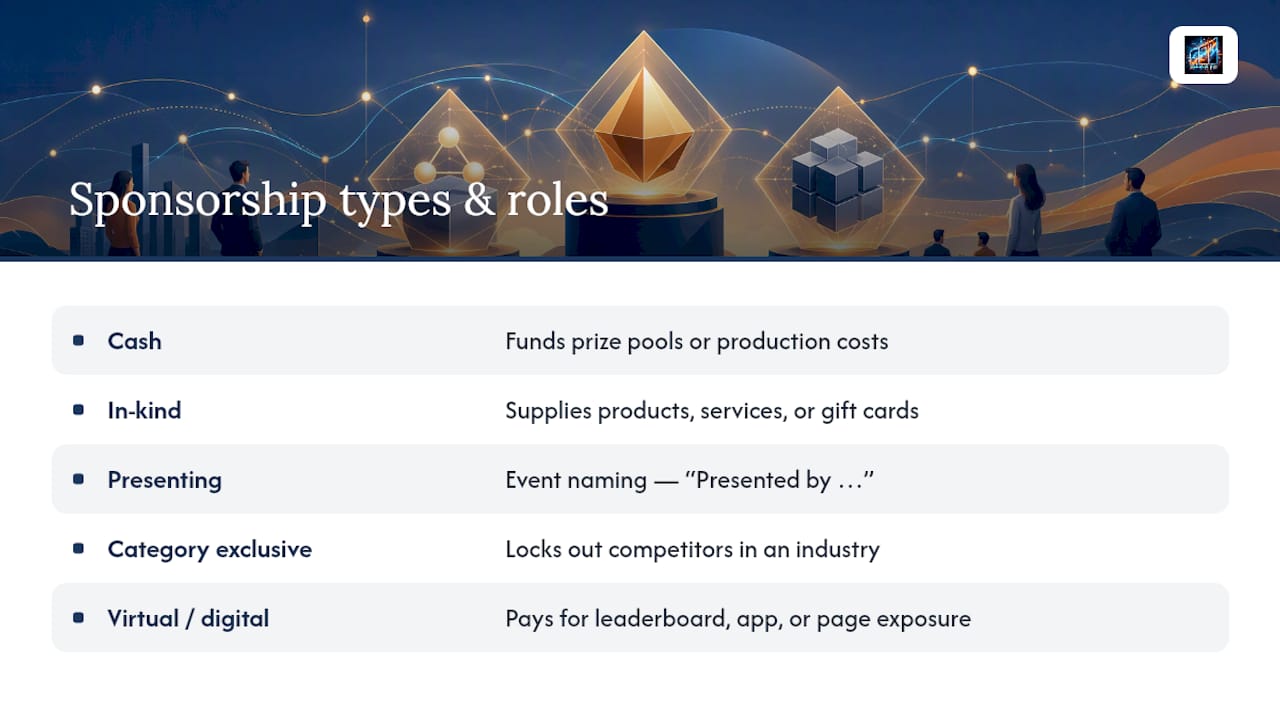
Sponsors come in five common flavors. Cash sponsors fund prize pools or production costs directly. In-kind sponsors supply products, services, or gift cards instead of money, which works well for smaller contests without a marketing budget. Presenting sponsors get their name attached to the entire event ("Presented by..."), category exclusives lock out competitors in their industry, and virtual or digital sponsors pay for exposure on leaderboards, apps, or embedded contest pages rather than physical booths.
Each type chases a different outcome. Some want brand awareness and are happy with logo placement and social mentions. Others want lead generation, which means they need access to entrant emails or a booth where they collect contact information directly. Product sampling sponsors want physical distribution points. Talent recruiters, common in technical competitions, want visibility with a specific skill pool. Some sponsors care about mission alignment more than exposure, particularly nonprofits and community brands.
Matching sponsor type to contest scale matters. A neighborhood cooking contest attracts local restaurants and in-kind sponsors. A regional trivia league or a fantasy sports contest with thousands of players can support cash tiers and category exclusives because the audience size justifies a higher price.
How to Build Sponsorship Packages: Tiers, Deliverables, and Pricing
The three-tier model works because it gives sponsors an easy decision instead of an open-ended negotiation. Presenting sponsor gets top billing everywhere, from event name to press mentions. Supporting sponsor gets logo placement and defined social coverage but no naming rights. Prize partner covers or co-funds the prize itself, often in exchange for product visibility during the award moment. Beyond the three tiers, single-item sponsorships work well too: a photo booth sponsor, an awards-segment sponsor, or an app sponsor tied to your leaderboard.
Deliverables should map cleanly to each tier so there's no ambiguity once the contract is signed:
- Naming rights and stage or page branding (presenting tier only)
- Logo placement on leaderboards, entry forms, and printed materials
- A set number of social media posts or mentions with defined timing
- On-site or virtual activation space (booth, banner, branded landing page)
- Entrant or lead data shared under agreed privacy terms
- A post-event performance report with attendance and engagement numbers
Pro Tip: Price your tiers by comparing what similar events charge for similar exposure, not by guessing a round number.
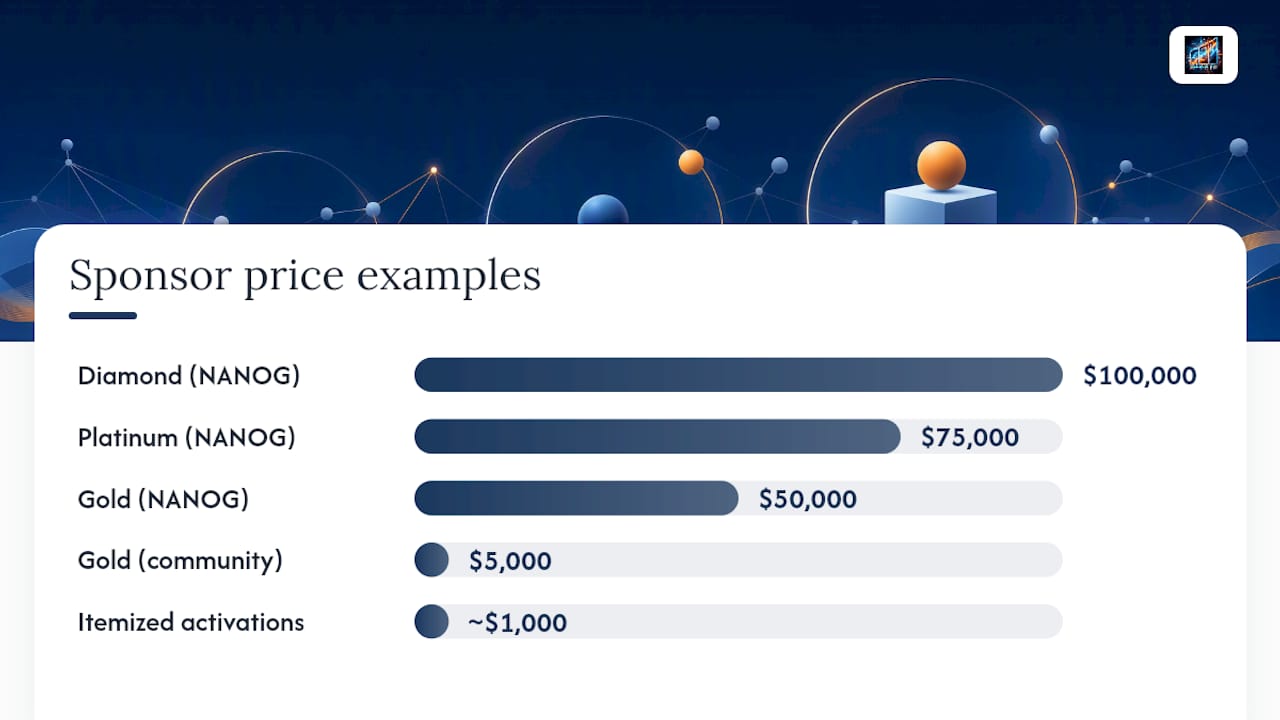
Real prospectus examples show how wide that pricing range runs. Large conference sponsorships published by NANOG list diamond packages at $100,000, platinum at $75,000, and gold at $50,000, with smaller itemized activations starting around $1,000. A community-scale event tells a different story. The 2026 NC Hot Sauce Smokin' Hot Sponsorship prospectus prices its gold tier at $5,000, which includes a vendor tent and a social media spotlight. Corporate appetite for these packages is climbing, too. Eventbrite reports that 44% of corporate marketers increased sponsorship spending in 2023, which gives smaller organizers real leverage when pricing their own tiers against audience size rather than event prestige alone.
How to Pitch and Secure Contest Sponsors
Timing determines whether a sponsor says yes. Small local contests can move fast, often closing sponsors within four to six weeks of the event, especially when leveraging local radio advertising and sponsorship options to connect with community businesses. Mid-size or large events need three to six months of lead time because marketing departments budget sponsorships in advance and require internal approval cycles.
Before any outreach, assemble four things:
- A one-page prospectus with tier pricing and deliverables
- A short benefits sheet that summarizes audience size, demographics, and past turnout
- A clear list of asset deadlines (logo files, banner sizes, copy approval dates)
- Evidence of past performance, even informal numbers from a prior contest
Outreach works best as a sequence, not a single email. Build a prospect list of businesses that already serve your contest's audience. Use a warm introduction whenever possible instead of a cold pitch. Send a tailored proposal that references the specific sponsor's goals, follow up within a week if you hear nothing, and set a decision check-in date so the conversation doesn't stall indefinitely.
Pro Tip: Name the specific sponsor tier in your subject line. "Gold Tier Sponsorship: [Contest Name]" gets opened far more often than a generic pitch.
The signed agreement should spell out payment terms, a deliverable schedule with dates, whether the sponsor gets category exclusivity, and a cancellation policy that protects both sides if the event changes.
Legal Basics and Co-Sponsorship Considerations
Contests and sweepstakes are legally different, and that distinction changes what you owe entrants. A contest awards prizes based on skill, judged against defined criteria. A sweepstakes awards prizes based on chance, which triggers stricter rules around free entry and disclosure in most states. Mislabeling one as the other can invalidate your rules or expose you to regulatory complaints.
Co-sponsorship adds risk because two parties now share responsibility. Legal advisories recommend spelling out in writing who drafts the official rules and who is liable if a prize doesn't ship or arrives damaged, since a co-sponsor supplying only cash or product may assume the other party owns that responsibility. That guidance comes directly from Thompson Coburn's advisory on co-sponsoring contests, which also flags data sharing and privacy obligations as frequent blind spots.
Four practical steps cover most of the risk: a written sponsor agreement, clear official rules posted publicly, a privacy notice covering entrant data, and documented age and location eligibility checks before you announce winners.
Sponsor Activation and Fulfillment Checklist
Sponsors judge the relationship by whether promised deliverables actually happened, not by the pitch deck. Build your fulfillment plan around three phases:
- Before the event: lock in asset deadlines, confirm creative specs (logo files, banner dimensions), and brief staff on what each sponsor paid for
- During the event: manage sponsor booths or virtual placements, handle announcements at the promised moments, and coordinate prize handoffs so the sponsor gets visibility during the actual award
- After the event: send a performance report with attendance or engagement numbers, a creative recap showing where the sponsor's branding appeared, and a lead list if that was part of the deal
That post-event report is often the difference between a one-time sponsor and a repeat one, since it's the first thing a sponsor's marketing team reviews before renewing.
Negotiating Sponsorship Terms Without Underselling Your Contest
Sponsors will almost always ask for more than your published tier includes, and that's fine as long as you know your floor before the conversation starts. Decide in advance which deliverables are fixed (logo placement, standard social mentions) and which are negotiable (extra booth space, additional social posts, custom activation ideas). That split lets you say yes to a sponsor's request without quietly discounting your entire package.
Customization works best when it's additive rather than a straight discount. If a sponsor wants exclusivity in their category but your published tier doesn't include it, price exclusivity as a separate line item rather than folding it into their existing rate. If a sponsor can't meet your cash ask, offer a hybrid deal: partial cash plus an in-kind contribution like prizes or event supplies, which often gets a "yes" from a sponsor whose marketing budget is already committed elsewhere.
Never negotiate deliverables down without adjusting price to match. A sponsor who talks you into dropping the post-event report or shrinking their social mention count should pay less, not the same rate for less value. That consistency protects your pricing for every sponsor who comes after them, since word travels between local businesses about what a package actually costs.
Put every negotiated change in writing before the event, even small ones. A verbal agreement to add an extra banner or swap a deliverable is the most common source of disputes once the event wraps and everyone's memory of the conversation differs.
Turning One-Time Sponsors Into Repeat Partners
The fastest way to lose a sponsor after year one is silence between events. Sponsors who hear nothing from you until the next pitch season assume the relationship was transactional, and they'll compare your next ask against every other contest that reached out to them in the meantime.
Send the performance report promptly, ideally within two weeks of the event ending. A sponsor who sees concrete engagement numbers while the event is still fresh in their mind is far more likely to commit early for next year, sometimes before you've even opened your next sponsorship cycle.
Beyond the formal report, a short check-in a few months later goes a long way. Share a relevant update, mention an upcoming milestone, or simply ask what worked and what didn't from their side. That conversation surfaces problems before they become reasons to walk away.
Offer renewing sponsors a small incentive: first right of refusal on their previous tier, a modest discount for early renewal, or first pick of a new activation option before it goes to other prospects. Loyalty pricing costs you very little compared to the cost of rebuilding a sponsor list from scratch every year.
Repeat sponsors also become referral sources. A sponsor who felt properly served will often recommend your contest to a peer business, which is a far warmer lead than any cold outreach list you could build yourself.
Common Challenges in Contest Sponsorships and How to Fix Them
The most frequent problem is a mismatch between what a sponsor expects and what they actually receive. This usually happens when deliverables were discussed verbally but never written down. The fix is simple and non-negotiable: every sponsorship, no matter how small, gets a written agreement listing exact deliverables and dates.
A second common issue is underpricing out of fear that a business will say no. Organizers new to sponsorships often set tier prices too low, then struggle to deliver everything promised because the margin doesn't support it. Anchor your pricing to comparable events and audience size rather than a number that feels safe to ask for.
Timing mismatches cause trouble too. Sponsors often approve budgets months in advance, and organizers who wait until a few weeks before the event to start outreach miss that window entirely. Build your sponsor outreach calendar around your event's lead time, not the event date itself.
Finally, co-sponsorship confusion over liability creates real legal exposure, particularly around prize delivery and rules ownership. A written agreement that names who is responsible for what removes most of that risk before it becomes a dispute.
Publisher Perspective: Using Megasports Arena to Host Branded Contests
An embeddable platform changes the fulfillment math for organizers. Instead of manually updating a leaderboard or emailing sponsors a recap, a hosted system like Megasports Arena can generate sponsor-branded pages, live leaderboards, and automated post-event reporting as part of the contest itself. That reduces the operational burden sponsors never see but organizers feel constantly.
This setup fits best for recurring contests with an ongoing audience, like fantasy sports pools or trivia leagues, where a sponsor's branding stays visible across multiple weeks rather than a single event day. For a large sports-fan audience, that kind of persistent exposure often outperforms a one-day booth.
— Pete Korner
How Megasports Arena Can Help Run Sponsored Contests
Running a sponsored contest without embedded tools means someone on your team manually updates leaderboards, tracks entries, and builds recap reports by hand every single time. Megasports Arena replaces that manual work with an embeddable contest structure built for sports-fan audiences across the NFL, NBA, NHL, MLB, WNBA, CFB, and CBB.

Organizers weighing a hosted contest against a self-managed one usually come down to the same question: how much staff time can you afford to spend on updates, reporting, and fixing entry disputes during the event? A hosted structure like the Active Contests page shows how sponsor branding appears directly on live leaderboards, prize workflows, and entry pages without extra development work. Sponsors get a branded landing page and a leaderboard presence for the full length of the contest, not just a mention on event day, and organizers get the reporting sponsors ask for without building it themselves.
If you're evaluating whether to build this in-house or use a general contest structure, review the general contest page to see how the setup works before your next sponsorship cycle begins. For organizers running fantasy or trivia contests with a repeat audience, that persistent branding often does more for a sponsor than a single-day booth ever could.
Sources
- Read this before you co-sponsor a sweepstakes or contest — Thompson Coburn
- 2026 NC Hot Sauce Smokin' Hot Sponsorship — Eventeny
FAQ
What Is the Easiest Type of Sponsorship to Get?
In-kind sponsorships are typically the easiest to secure because they don't require a cash outlay from the sponsor. A local business offering product samples, gift cards, or supplies instead of money faces a much lower internal approval bar than one being asked to write a check.
How Can I Get a Free Sponsorship for My Contest?
There's no such thing as a fully free sponsorship since sponsors always expect something in return, even if it's just brand exposure. The closest equivalent is an in-kind trade where a sponsor provides prizes or services in exchange for logo placement and social mentions, with no cash changing hands on either side.
What Are the Main Types of Contest Sponsorships?
The four most common types are cash sponsors, in-kind sponsors, presenting sponsors, and category exclusives, each tied to a different sponsor objective like brand awareness, lead generation, or exclusivity. Virtual and digital sponsors have become a fifth common category as more contests move online through platforms like Megasports Arena.
What Kinds of Companies Typically Give Out Sponsorships?
Local restaurants, retailers, and service businesses commonly sponsor community-scale contests, while larger conferences attract national brands, tech companies, and industry associations. According to Eventbrite's research, 44% of corporate marketers increased their sponsorship spending in 2023, which signals growing interest from mid-size and large companies looking for measurable brand exposure.
Does Megasports Arena Charge for Hosting a Sponsored Contest?
Current pricing details for hosting a sponsored contest through Megasports Arena are available directly on the Active Contests page. The core sports fantasy games and contests are free to play for entrants, with monetization built around sponsor and partner integration rather than entry fees.