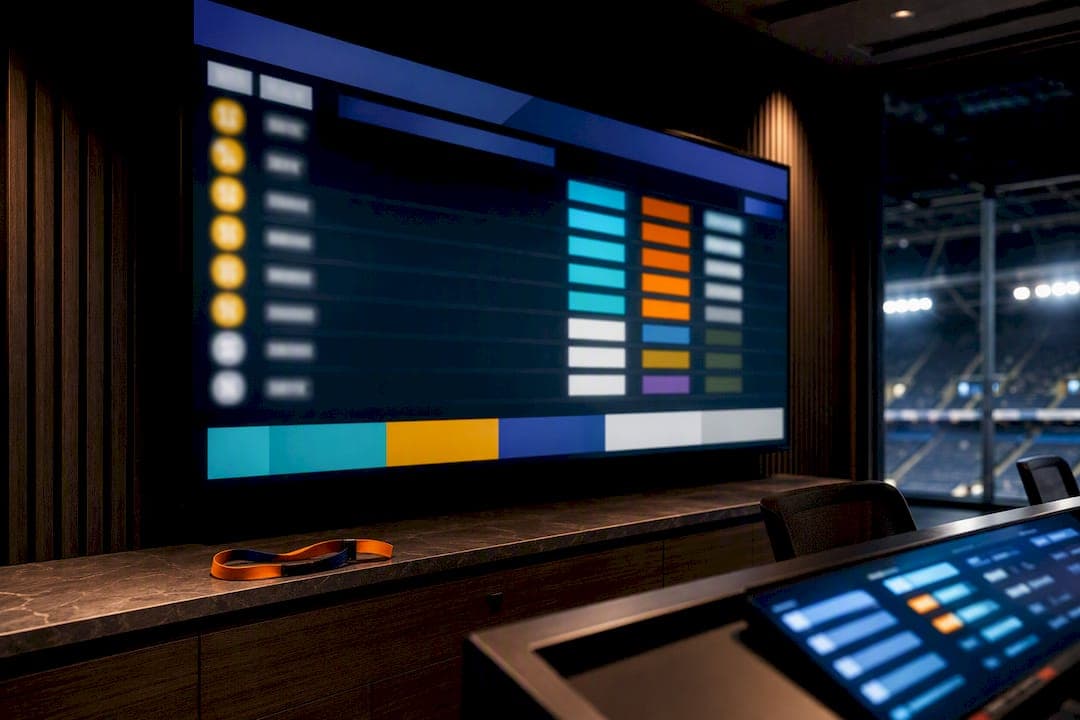
The highest-impact way to highlight a sponsor on a leaderboard is a stacked approach: a persistent banner or footer placement, a rotating logo carousel, and a dedicated sponsor slide tied to prize information. Run that combination as a tiered package, track real metrics against it, and sponsors renew. Skip the packaging and measurement, and even great logo placement gets treated as a one-time favor instead of a paid asset.
TL;DR:
- Using a tiered sponsorship package with persistent banners, rotating logos, and dedicated slides increases renewal chances and provides measurable value.
- High-impact placements for sponsors include full-screen slides and prize-card branding, especially on large screens, while smaller screens favor banners and carousels.
- Maintaining minimum display times of three seconds for rotating logos and five seconds for full slides ensures sponsor recognition and visibility.
- Post-event reporting should focus on impressions, click-throughs, lead captures, and conversions, with standardized scores like the Sponsorship Impact Score improving effectiveness metrics.
- Built-in embedding and tracking capabilities simplify sponsor integration and extend exposure across multiple contest hubs and partner sites.
Table of Contents
- What Are the Best Display Options for Sponsor Leaderboards?
- What Sponsorship Tiers Should You Offer?
- How Do You Set Up Sponsor Displays Step by Step?
- How Do You Measure Sponsor Impact After an Event?
- How Does Megasports Arena Handle Sponsor-Ready Leaderboards?
- Balancing Sponsor Exposure With Player Trust
- Ready to Put Sponsor-Ready Leaderboards to Work?
- Sources
What Are the Best Display Options for Sponsor Leaderboards?
Where a sponsor's logo lives on your leaderboard determines whether it registers as a glance or an impression that sticks. Most events end up combining multiple formats rather than picking just one.
Rotating logo carousels cycle multiple sponsors through a fixed display zone, usually the header or sidebar of the leaderboard screen. They're efficient when you have five or more sponsors and limited screen real estate, but each brand only gets a few seconds per rotation.
Ticker or footer banners run continuously along the bottom of a live screen or embedded web leaderboard. They're low-friction and always visible, which makes them ideal for secondary sponsors who want steady exposure without competing for the main frame.
Dedicated sponsor slides interrupt the display sequence entirely, giving one brand the full screen for several seconds, often paired with prize details. These work best for headline sponsors on a big screen at a live event, where a full-screen moment feels earned rather than intrusive.
Prize-card placements put a sponsor logo directly inside the card showing the top prize or current leader, which contest platforms report drives repeated impressions because participants keep returning to check their rank.
- Live big-screen displays: dedicated slides and prize-card branding work best.
- Mobile app leaderboards: rotating logos and footer banners fit the smaller screen.
- Embedded web leaderboards: footer banners and prize-card placement hold up without disrupting page load.
Pro Tip: Never let a sponsor logo appear for less than 3 seconds on a rotating slide. Anything faster reads as background noise, not a sponsorship.
Keep contrast high (dark logo on light background or vice versa), respect a safe margin of at least 5% around every edge, and test every placement on the smallest screen size your audience actually uses.
What Sponsorship Tiers Should You Offer?
Pricing sponsor leaderboard placements gets easier once you standardize what each tier includes. Three tiers cover most events without overcomplicating the sales conversation.
- Bronze: Logo appears in the rotating carousel on the main leaderboard only. No prize-card integration, no entry-page placement. This is the entry point for sponsors testing the waters.
- Silver: Everything in Bronze, plus a logo on the contest entry page and a custom promotional banner in the footer ticker. Silver sponsors also get basic reporting after the event.
- Gold: Full co-branding across the leaderboard, entry page, and prize card, plus a dedicated sponsor slide during live rotations and opt-in lead access from participants who agree to share contact details.
Premium add-ons justify a real price jump. An exclusive "leaderboard sponsor" designation, where no competing brand appears anywhere on that screen, commands a premium because physical proximity and photo-op inclusion consistently rank among the highest-value elements sponsors will pay extra for. On-site display tables and photo-op integration with the top prize follow the same logic. A championship leaderboard sponsor package commonly bundles electronic leaderboard logo placement with on-site display space and hospitality benefits, which is worth using as a template when you price your own Gold tier.
Negotiate on deliverables, not just dollars. A sponsor unwilling to pay Gold pricing might accept Silver pricing with one Gold feature added, like lead access, if it's the piece they actually value most.
How Do You Set Up Sponsor Displays Step by Step?
Getting sponsor assets live without a last-minute scramble comes down to sequence. Skip a step here and you'll find out during the event, not before.
- Collect sponsor logos and brand guidelines at least two weeks before the event, not two days.
- Build sponsor slide templates in your display software, matching each tier's format (carousel, banner, full slide).
- Upload assets to your display system or leaderboard platform and confirm file compatibility.
- Schedule the rotation sequence so no single sponsor's logo appears back to back with itself.
- Test every placement on the actual devices your audience will use, not just your desktop preview.
- Go live, then check the first few rotations in person or via screen recording to confirm timing.
Technical specs matter more than most organizers expect. Use PNG or SVG files for static logos, since both preserve transparency and scale cleanly. MP4 works for animated sponsor slides on systems that support video playback. For a standard 1920x1080 display, keep logos within a 400x200 pixel safe zone with at least 40 pixels of margin on every side. Minimum on-screen time should never drop below 3 seconds for a rotating logo or 5 seconds for a full sponsor slide.
- Confirm file format compatibility before the week of the event, not the day of.
- Build opt-in lead capture into entry forms if a Gold sponsor's package includes lead access.
- Export captured leads as a CSV file sponsors can import directly into their own CRM.
- Run a full test cycle on the embedded web leaderboard, since browser rendering differs from big-screen display software.
Pro Tip: Test your sponsor slides on a phone with a cracked or dim screen. If the logo still reads clearly there, it'll read clearly everywhere.
How Do You Measure Sponsor Impact After an Event?
Sponsors renew when they can see a number, not just a memory of their logo on a screen. Four metrics cover almost every reporting conversation.
- Impressions: total visible time and estimated view count across all placements.
- Clicks and click-through rate: relevant only for embedded web leaderboards or app-based contests with clickable sponsor elements.
- Opt-in leads captured: the number of participants who agreed to share contact information tied to that sponsor's tier.
- Conversions: applicable when a sponsor offers a discount code or landing page tracked separately.
For a more formal benchmark, the Sponsorship Impact Score measures shifts in ad awareness, impressions, and consideration, giving organizers a standardized way to talk about effectiveness instead of relying on raw impression counts alone. Brands increasingly want that kind of evidence rather than a vague "people saw your logo" summary.
A simple post-event report should include total impressions, average visible time per sponsor, lead count by tier, the top-performing placement, and one recommended change for next time.
How Does Megasports Arena Handle Sponsor-Ready Leaderboards?
Megasports Arena runs multiple leaderboard hubs across different contest types, each built to carry sponsor branding whether the leaderboard lives on the main site or gets embedded on a partner page. That embed function matters more than it sounds: extending a leaderboard beyond the original event page multiplies sponsor impressions without any extra design work.
Real placements organizers use across these hubs include:
- A sponsor logo on the contest entry page before a player ever sees the leaderboard.
- An embedded leaderboard with a persistent sponsor footer running on a partner site.
- Prize-card sponsorship visible even when the leaderboard is embedded off-site.
Public sponsorship ranking tools like SponsorRadar's live tracking pages show the same principle at work: frequent, indexed exposure is what makes a sponsorship placement worth reporting on.
Balancing Sponsor Exposure With Player Trust
Sponsors overplay their hand when every screen refresh throws a new logo at players. One well-placed, high-value moment, tied to the actual prize a player is chasing, beats five subtle logos nobody consciously registers. Guard leaderboard integrity above all else. The instant players suspect rankings favor a sponsor's product or contest, trust collapses faster than any sponsor deal is worth. Structure renewals around performance data, not goodwill.
— peter
Ready to Put Sponsor-Ready Leaderboards to Work?
Building a sponsor package is one problem. Finding a leaderboard that already supports rotating logos, prize-card branding, and embed tracking without custom development is another. Some contest leaderboards are built to carry sponsor placements out of the box and can embed directly onto partner sites so impressions keep accumulating after the event page traffic fades.

Organizers running fantasy-style contests, trivia, or pool-based games can check the sports hash contest format to see how a leaderboard structure comes together with sponsor slots already in place. If you're evaluating current sponsorship inventory, browse active contests to see which formats have open sponsor placements right now, then reach out to talk through a tier that fits your event.