
The fastest way to turn casual visitors into daily active users is a daily embeddable mini-game with a public leaderboard, an embed placeholder, and a clear refresh schedule. Platforms like Megasports Arena exist for exactly this reason: publishers plug in a fantasy pick'em or puzzle widget instead of building one from scratch. Expect measurable gains in time on site and return visits within weeks, not months, once the loop is live.
Table of Contents
- Why Audience Retention Games Keep Readers Coming Back
- Which Game Formats Fit Your Site and When to Use Them
- Technical Musts: Indexability, Embed Placeholders, and Metadata
- A 4-Week Roadmap to Launch a Daily Mini-Game With a Leaderboard
- What to Measure and How to Make Money From It
- What Running Sports Contests for Years Actually Teaches You
- The Overrated Advice and the One Thing That Actually Moves the Needle
- Get a Daily Game and Leaderboard Live on Your Site
- Sources
- FAQ
Why Audience Retention Games Keep Readers Coming Back
Audience retention games work because they give a reader a reason to open the tab again tomorrow. That reason is rarely the content itself. It's the score they're chasing.
Mini-games hold attention far longer than a quiz or a poll. Riddle's mini-games retention playbook puts average engagement time for mini-games around 6.6 minutes per session, compared to a general interactive-content average near 112 seconds across news and publishing. That gap is the entire business case in one number.
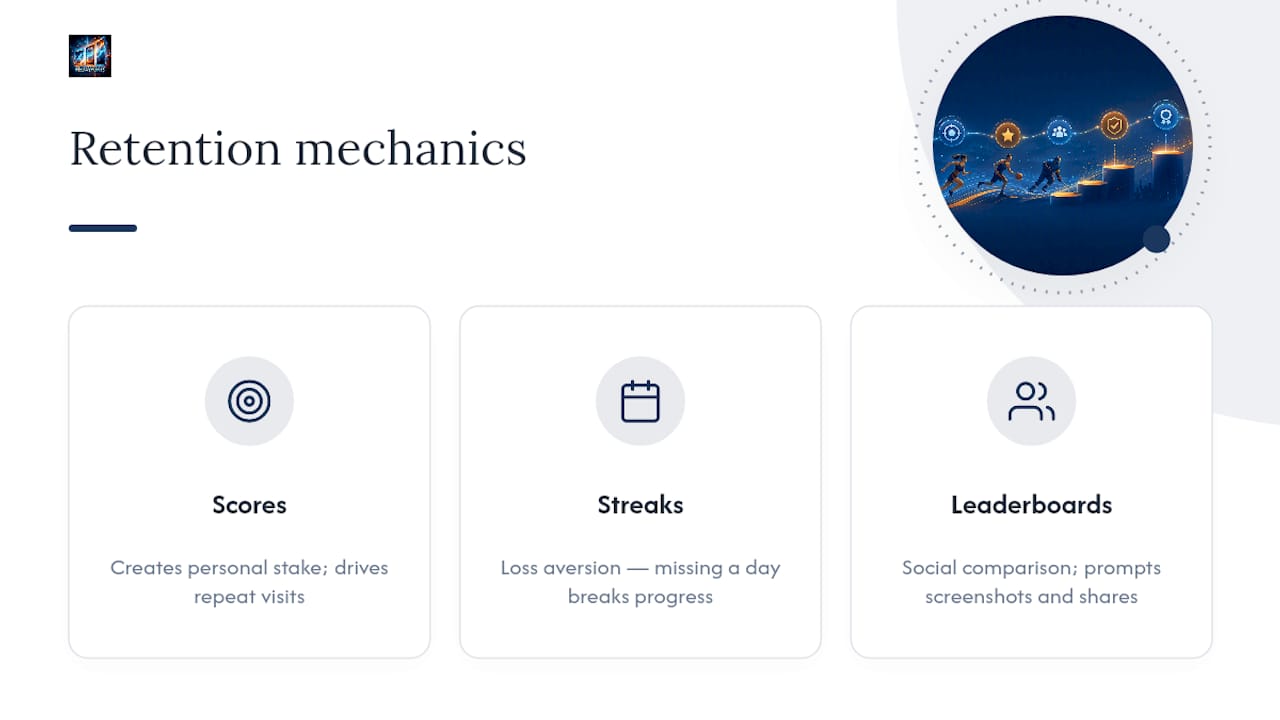
The mechanics behind it are simple and old, as shown in the Droid Tycoon Community Stats | Droidex, which highlight leaderboard examples fueling competitive scores and fan engagement. Scores create a personal stake. Streaks create loss aversion, since missing a day breaks a running total the player has already invested in. Leaderboards add social comparison, and social comparison is what turns a solitary five-minute activity into something people screenshot and send to a group chat. A leaderboard built around fantasy sports taps the same competitive instinct that keeps someone checking a fantasy roster three times a day during football season.
The commercial upside runs parallel to the behavioral one. A game that asks for an email or a login before showing results hands you first-party data at a moment when the visitor is motivated, not annoyed. Every extra session is another ad impression on inventory you already own. And unlike a viral article that spikes once and fades, a leaderboard resets weekly and pulls the same people back on a schedule you control.
Which Game Formats Fit Your Site and When to Use Them
Format choice should follow your editorial calendar, not the other way around. A sports site and a general news brand shouldn't be running the same widget.
Daily puzzles, the crossword and Sudoku style formats, are the highest dwell-time option available to most publishers. PA Media's guide to digital puzzles notes that puzzles paired with streaks and leaderboards increase both retention and willingness to subscribe, which is why so many news sites now gate premium puzzle archives.
Predictors and score-guessing games do different work. They spike around live events, converting one-time event traffic into habitual play. Publishers who launched event-driven games during major tournaments saw higher return visits and more account creation tied directly to the interactive feature, not the article next to it.
Match the format to your strength:
- Sports sites: predictors, bracket games, and pick'em contests tied to the weekly schedule.
- News brands: topical weekly quizzes that reference the week's actual coverage.
- Any site chasing email signups: a single-question poll, since polls approach near-total completion rates because there's nothing left to abandon.
Riddle's state of interactive content research puts news and publishing completion rates around 73.4%, well above what most long-form content ever sees.
Technical Musts: Indexability, Embed Placeholders, and Metadata
An embedded game that search engines can't read is invisible traffic you paid to build. The host page needs server-side rendering, or at minimum a server-rendered fallback, so the description and purpose of the game exist in the initial HTML response.
Contentful's JavaScript SEO guidance is blunt about this: if the page is client-side-only with no server-rendered metadata, search engines may index it as empty. The interactive widget never transfers any SEO value to the domain hosting it. That's a common, expensive mistake.
Embed placeholders solve a separate problem: editorial overhead. A single placeholder template can pull a fresh puzzle or predictor on a schedule through an API, meaning your team publishes daily content without touching code every morning. Riddle's retention playbook describes this pattern as the difference between a sustainable daily game and one that quietly dies after three weeks because nobody had time to update it.
At minimum, every hosting page needs a real page title, a meta description naming the game and its subject, alt text on any preview image, and labeled form inputs for accessibility. Skipping these isn't a small oversight. It's the reason some publishers run a game for months and never see a single organic search visit to the page hosting it.
A 4-Week Roadmap to Launch a Daily Mini-Game With a Leaderboard
You don't need a quarter-long project plan. A small team can get a working daily game live inside a month, and an MVP inside a week.
- Week 1: Pick one format (a predictor if you cover live sports, a puzzle if you don't). Set up the embed placeholder on a server-rendered page. Build or source your first batch of content, enough for two weeks of daily plays.
- Week 2: Wire in a leaderboard and basic analytics events. Run mobile QA on real devices, not just a resized browser window, and check that every input has a visible label for accessibility.
- Week 3: Turn on email opt-in inside the game flow, add your first ad placement, and confirm your consent banner actually blocks tracking scripts until a visitor accepts.
- Week 4: Run a soft beta with a subset of readers, fix whatever breaks, then launch publicly. Set a recurring calendar reminder for content refreshes and seasonal tie-ins.
Pro Tip: Launch with exactly one daily game. Measure it for three weeks before you build a second one. A single well-measured game beats three half-finished ones every time.
This timeline tracks with what publishers actually report: Riddle's data points to roughly one week for a basic MVP and up to four weeks once ad integration and automation are layered in. For the embed mechanics themselves, a five-step guide to embedding playable games walks through the same setup in more technical detail.
What to Measure and How to Make Money From It
Track five numbers from day one: time on page, repeat visit rate (daily actives over monthly actives), completion rate, email capture rate, and ad RPM specifically on game views, separate from your article RPM. Mixing the two hides whether the game is actually pulling its weight.
Attribution doesn't need to be complicated. Tag every promotional link to the game with UTM parameters, fire an analytics event on game start and game completion, and run a simple A/B test on one variable at a time, like leaderboard placement above versus below the game itself.
Monetization has several workable paths that don't wreck the experience: native ad slots inside the game shell, sponsor-branded weekly challenges, a lead-capture step before results are revealed, and a premium puzzle archive for the most engaged players. PA Media's research on digital puzzles backs the archive model specifically, tying gated puzzle access to real subscription lift.
What Running Sports Contests for Years Actually Teaches You
Daily and season-long contests behave differently, and publishers who treat them the same waste effort. A daily predictor needs constant fresh content and a short feedback loop. A season-long leaderboard needs almost no daily maintenance but demands a strong opening week to hook players who'll check back for months.
The recurring mistakes are predictable: shipping a client-side-only embed that search engines never index, ignoring mobile layout until complaints pile up, and bolting on a consent flow after launch instead of before.
Three fixes cover most of it. Add a visible leaderboard, even a simple one. Capture email inside the game rather than through a separate popup. Automate your content refresh so a missed Tuesday doesn't break the whole streak mechanic for every player who was counting on it.
The Overrated Advice and the One Thing That Actually Moves the Needle
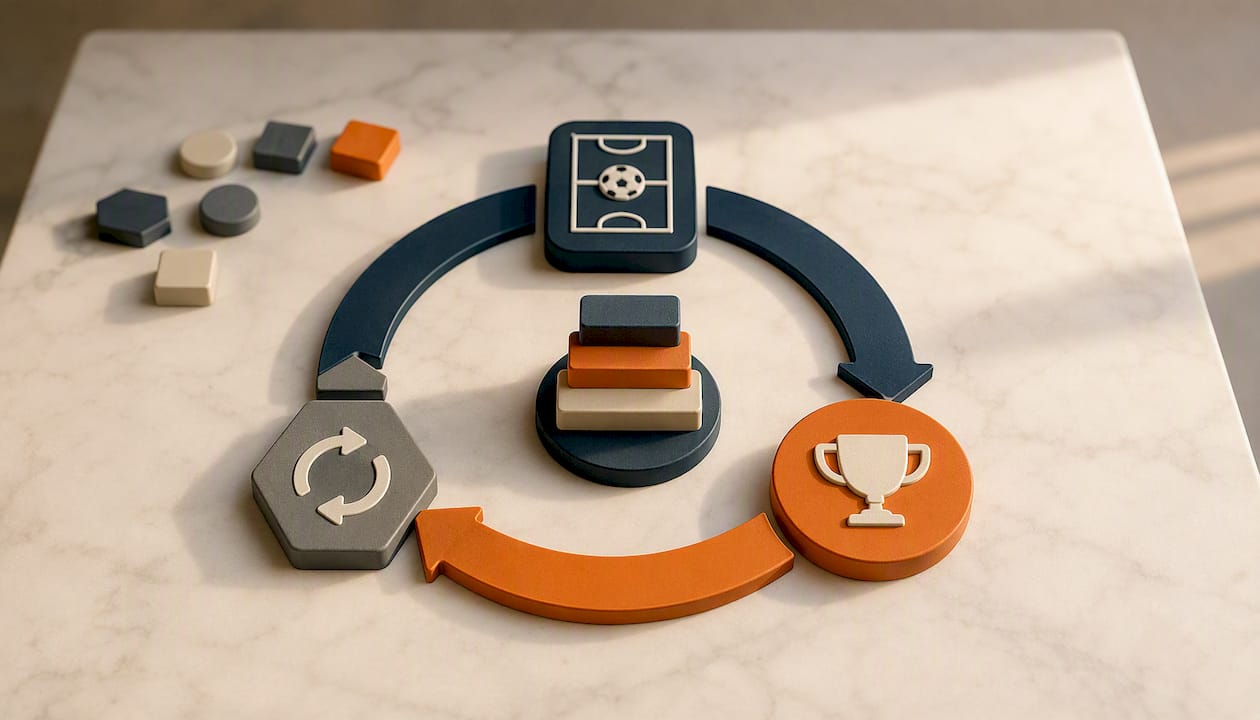
Most retention advice for publishers focuses on content variety: more quiz types, more polls, more formats stacked on top of each other. That's backwards. The data points the other way. One well-built daily game with a leaderboard outperforms five mediocre interactive widgets, because a leaderboard is what creates the habit loop, not the novelty of the format.
The conventional wisdom also underrates the technical side. Publishers will spend weeks debating game mechanics and then ship an embed with zero server-rendered metadata, quietly forfeiting every bit of organic search value the game could have earned. That's not a minor gap. It's the difference between a widget that compounds traffic over a year and one that only works while you're actively promoting it.
If you're prioritizing one thing first, make it the leaderboard and the SSR fallback page together. Everything else, ads, email capture, seasonal campaigns, is easier to layer on once that foundation actually holds traffic.
— Pete Korner
Get a Daily Game and Leaderboard Live on Your Site
Building a fantasy pick'em or predictor widget from scratch usually means weeks of engineering time you don't have. There are platforms that offer embeddable daily and weekly fantasy contests, live leaderboards, and integration hooks designed to plug into existing pages instead of replacing them.

Such platforms often cover multiple sports contests across daily, weekly, and season-long formats, providing flexibility beyond a single sport or cadence. A basic MVP embed with a leaderboard can be live within about a week, with fuller integration, including ad placements and automated refresh, typically running two to four weeks. If you also cover the handicapping side of sports content, the betting tools section shows the statistical analysis features that pair naturally with a fantasy contest embed. For a look at how the leaderboard and archive experience feels from the player side, the active contests page is a good place to start browsing what's live right now.
Sources
FAQ
What Are Audience Retention Games?
They're embeddable interactive games, like mini-games, predictors, and puzzles, that publishers add to their sites to increase time on page and bring visitors back on a recurring schedule.
How Long Does It Take to Launch One?
A basic version with an embed and leaderboard can go live in about one week, while a fuller setup with ads and automation usually takes two to four weeks, according to Riddle's retention research.
Do Embedded Games Hurt or Help SEO?
They help only if the host page is server-rendered with indexable metadata; a client-side-only embed can get indexed as an empty page and pass along no SEO value, per Contentful's JavaScript SEO guidance.
What Should I Measure First?
Track time on page, repeat visit rate, completion rate, and email capture rate before worrying about monetization metrics like ad RPM.
Does Megasports Arena Work for Non-Sports Sites?
Megasports Arena is built around sports fantasy contests and handicapping tools across leagues like the NFL, NBA, NHL, and MLB, so it fits best for sites with sports content or sports-adjacent audiences.